
Family stories
Family stories
The stories behind the names
A family history is more than a list of names. Read about ancestral homes, leadership, journeys and the changes that shaped each generation. Historical books begin the story; family memories, photographs and carefully sourced contributions help bring it closer to the present.
Explore this page ↓
Explore memories of ancestral homes, migration and life today. Published stories are submitted by families and reviewed by the site administrator.
Stories behind the family names
Read approved historical summaries and family memories. Source chapters and the complete account are linked from each story.
Approved family history
Malik Jahan Khan, Sardar Bahadar, Tawana, of Hadali
Malik Jahan Khan of Hadali is presented as a cavalry officer who later developed substantial agricultural estates. The chapter records his service, wounds, retirement and the title of Sardar Bahadar. It also notes his interest in horse breeding and the military employment of his son, brother, nephew and other relatives.
Read the history & source chapters →Approved family history
Malik Khairud-din Khan
Khairuddin Khan’s family is associated with settlement and land grants in the Kasur region. Marriage linked it to Kutbuddin Khan’s household. After Ranjit Singh conquered Kasur, family members accompanied the chief to Mamdot, where replacement grants and military service continued their position.
Read the history & source chapters →Approved family history
Malik Khuda Bakhsh Khan, Tawana, of Hamoki
The Hamoki Tiwana family’s landholding is linked to Bakhsh Khan’s service in Ranjit Singh’s army. Sultan Mahmud Khan later supplied cavalry during the Multan campaign and entered police service after annexation. The account follows the estate to his son Khuda Bakhsh and describes its management under the Court of Wards.
Read the history & source chapters →Approved family history
Malik Mahomed Hakim Khan, Khan Bahadar, Nun, of Mitha Tawana
The Nun chapter describes close marriage connections with the Tiwanas. Bakhsh Khan and Jahan Khan served Ranjit Singh, while Fateh Khan joined Edwardes during the Multan campaign. Hakim Khan later served in cavalry, police and revenue appointments, and developed landed property after his military career.
Read the history & source chapters →Approved family history
Malik Roshan Din of Shamsabad
The Shamsabad chapter discusses the Awan community’s distribution across northern Punjab and competing theories of its origins. It records the family tradition of a connection with Ghazni and Kutab Shah, then links local settlement with Shamir Khan. These origin traditions should remain distinct from the recent family relationships in the tree.
Read the history & source chapters →Approved family history
Malik Zaman Mahdi Khan, Janjoah, of Darapur
The Janjoah chapter discusses settlement in the Salt Range and the wider Jhelum region. Its opening compares several traditions of Rajput ancestry and migration, acknowledging uncertainty about remote origins. The Darapur family’s recent relationships are treated separately in the tree; missing generations have not been filled in from origin legends.
Read the history & source chapters →Approved family history
Manauli chief family
Manauli appears among the chief families of historical Ambala district. This starter follows the Gopal Singh branch of Budh Singh, through Jai and Autar Singh to Raghbir and Umrao Singh. It leaves the numerous parallel branches open for a later, fuller transcription rather than combining uncertain connectors.
Read the history & source chapters →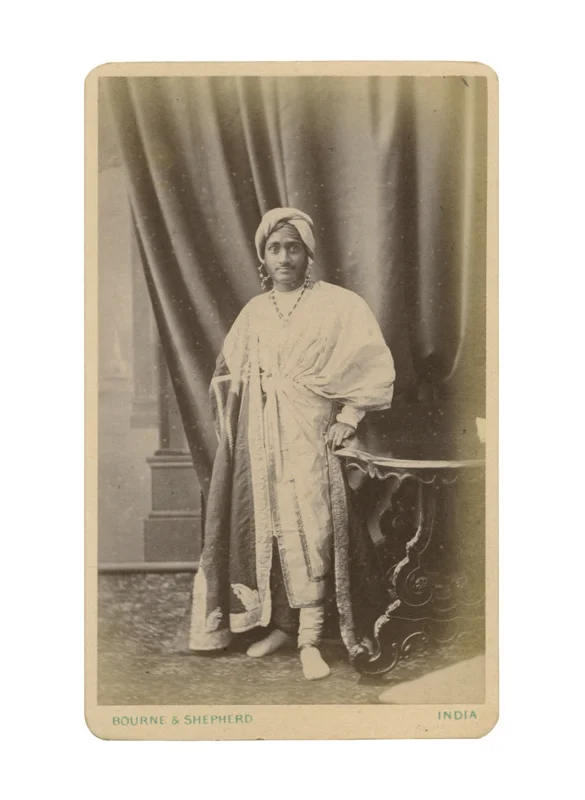 Raja Bijai Sen of Mandi · c.1875
Approved family history
Mandi Sen royal family
The Sen house of Mandi is documented in a large government pedigree with many collateral branches. This starter follows the principal recorded line from Ajbar through Chatar, Sahib, Narayan and later rulers, and preserves the distinction between the Ishri, Zalim and Ude branches. The official district history provides context for Mandi’s separation from Suket and the development of its capital.
Read the history & source chapters →Approved family history
Mangal — the ruling family
Mangal lay beside the Sutlej near Bilaspur and had previously paid tribute to that state. Massy describes its recognition as a separate chiefship after the Gurkha conflict in 1815. The chart records Bahadar Singh, Pirthi Singh, Jit Singh and Jit Singh’s sons.
Read the history & source chapters →Approved family history
Manimajra — the Dhillon chiefs
The Manimajra house connects the Chandigarh area with the chiefly families of old Punjab. This initial tree follows the early generations and retains the later branch for further research.
Read the history & source chapters →Approved family history
Mirza Sultan Ahmad of Kadian
The Kadian account describes a family associated with local judicial office and landholding. It recounts conflict with the neighbouring Ramgarhia and Kanhya powers, a period of residence at Begowal, and Ghulam Murtaza’s return after an invitation from Ranjit Singh. Ghulam Murtaza and his brothers subsequently served in the Maharaja’s army.
Read the history & source chapters →Approved family history
Misar Sukh Ram Das
This family’s history is closely connected with the Lahore treasury. Ramjas worked under Basti Ram, and his brothers Ram Kaur and Jasa Mal followed him in service. With Dhian Singh’s patronage, Jasa Mal gained responsibility for part of the treasury. Lal Singh later held senior financial and political office.
Read the history & source chapters →For descendants, wherever life has taken you
Your family remembers what the books could not.
A missing name may be someone your grandparents remembered. An old photograph may be the only face a future generation ever sees. What feels ordinary to your family today can become a treasured part of tomorrow’s history.
Add a missing generation
Connect a parent, grandparent or branch you know.
Give a name a face
Share a family photograph, with permission and any known date.
Tell what happened next
Remember an ancestral home, school, journey or family tradition.
Start with one detail. You can return and add more. Include a source where possible, or clearly identify an oral memory. Submissions are reviewed before publication; living people’s details are shared only with their consent.
Help carry our story forward ↗