
Family stories
Family stories
The stories behind the names
A family history is more than a list of names. Read about ancestral homes, leadership, journeys and the changes that shaped each generation. Historical books begin the story; family memories, photographs and carefully sourced contributions help bring it closer to the present.
Explore this page ↓
Explore memories of ancestral homes, migration and life today. Published stories are submitted by families and reviewed by the site administrator.
Stories behind the family names
Read approved historical summaries and family memories. Source chapters and the complete account are linked from each story.
Approved family history
Misr Rup Lal
The family of Rup Lal is connected with Dilwal in the Jhelum district and the Lahore treasury. Basti Ram’s patronage helped Diwan Chand and his sons obtain appointments. Beli Ram succeeded to treasury responsibilities, while other relatives held financial offices and Rup Lal became governor of the Jalandhar Doab.
Read the history & source chapters →Approved family history
Moti Singh, Chashmawala
Jodh Singh’s career connects the Chashmawala family with the Kanhya leadership and Sada Kaur. He helped administer her estates before Ranjit Singh absorbed them. After resistance, imprisonment and a change of allegiance, he served at Attock and received an estate in the Shakargarh area, including a share of Chashma.
Read the history & source chapters →Approved family history
Moti Singh, Dafadar, Wazirabadia
The Wazirabadia chapter opens with competing traditions about the origins and settlement of the Waraich community. The author explicitly questions one legendary account. These stories should be read as traditions rather than a verified pedigree. The chapter’s chart and prose also disagree about Moti Singh’s parentage, so that relationship remains unresolved in the tree.
Read the history & source chapters →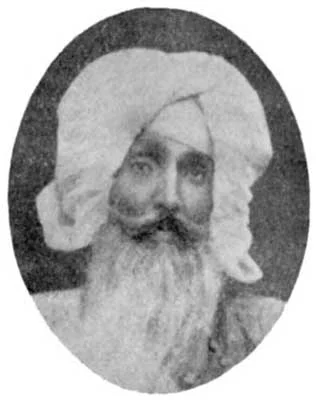 Maharaja Hira Singh of Nabha
Approved family history
Nabha royal family
Nabha shares Phulkian ancestry with Patiala and Jind. The pedigree traces Hamir Singh and Jaswant Singh through Gurditta and Suratiya. A separate collateral branch from Sukhchain leads through Basawa and Sukha Singh to Hira Singh and Ripudaman Singh. Keeping both branches visible prevents a succession list from being mistaken for one unbroken father-to-son line.
Read the history & source chapters →Approved family history
Nadhan Singh, Kontal Sindhu
The Kontal family is presented as a Sindhu branch connected with Jai Singh Kanhya. Its chiefs served the Kanhya leadership, including Sada Kaur, while their estate gradually diminished. The later account records cavalry service by Nadhan Singh and relatives, and notes both casualties in Afghanistan and losses of land through river erosion.
Read the history & source chapters →Approved family history
Nalagarh (Hindur) royal family
Nalagarh, historically Hindur, is represented by a pedigree beginning with Gajeh Singh and Ram Saran Singh. The chart separates Ram Saran’s Bije, Fateh, Agar and Bir Singh branches, with the later ruling line under Agar Singh. This preserves a hill-state family that would otherwise be absent from a plains-only archive.
Read the history & source chapters →Approved family history
Nand Singh, Kathu Nangal
The Kathu Nangal chapter connects the family with the Randhawa settlements around Amritsar. Sahib Singh joined Jai Singh Kanhya and acquired nearby villages. His descendants continued military service after acknowledging Ranjit Singh, while grants were gradually reduced. The account follows Partab Singh’s advancement and the later position of Nand Singh.
Read the history & source chapters →Approved family history
Nawab Ali Raza Khan
The Kizilbash account traces Ali Raza Khan’s family from the Caspian region through service under Nadir Shah. Ali Khan accompanied the invasion of India and received responsibilities at Kandahar. The narrative follows the family’s position after the rise of Ahmad Shah Durrani, showing how service and political change shaped its fortunes.
Read the history & source chapters →Approved family history
Nawab Imamudin Khan
The account follows Ghulam Mohiuddin’s advancement through the household of Diwan Moti Ram and his sons. Administrative work led to diplomatic responsibilities for Ranjit Singh, including dealings with Afghan leaders. The chapter places Nawab Imamuddin Khan’s family within this network of service and later responsibilities in Kashmir.
Read the history & source chapters →Approved family history
Nawab of Mamdot
The Mamdot account connects the family with the Afghan settlement at Kasur. Nizamuddin Khan and Fatehuddin Khan first served the Bhangi conquerors and later established their own authority there. The chapter follows contests with neighbouring Sikh chiefs and Ranjit Singh, placing Mamdot’s later history in the context of these struggles.
Read the history & source chapters →Approved family history
Nurpur Pathania chief family
Nurpur’s Pathania chief family is included among the Kangra families in the 1940 volume. The pedigree traces a selected later stem through Daya Datta, Pirthi and Fateh Singh to Bir, Jaswant and Gagan Singh. It identifies collateral sons separately and gives a source for future extensions beyond this historical segment.
Read the history & source chapters →Approved family history
Pandit Radha Krishan
Radha Krishan’s family traditions connect Mathura, Uch and Lahore. The chapter discusses religious learning and a land grant attributed to Jahangir for growing flowers used in worship. It also follows later links with Jaipur and religious patrons. Traditions and surviving documents are different kinds of evidence and should be identified as such.
Read the history & source chapters →For descendants, wherever life has taken you
Your family remembers what the books could not.
A missing name may be someone your grandparents remembered. An old photograph may be the only face a future generation ever sees. What feels ordinary to your family today can become a treasured part of tomorrow’s history.
Add a missing generation
Connect a parent, grandparent or branch you know.
Give a name a face
Share a family photograph, with permission and any known date.
Tell what happened next
Remember an ancestral home, school, journey or family tradition.
Start with one detail. You can return and add more. Include a source where possible, or clearly identify an oral memory. Submissions are reviewed before publication; living people’s details are shared only with their consent.
Help carry our story forward ↗