
Family stories
Family stories
The stories behind the names
A family history is more than a list of names. Read about ancestral homes, leadership, journeys and the changes that shaped each generation. Historical books begin the story; family memories, photographs and carefully sourced contributions help bring it closer to the present.
Explore this page ↓
Explore memories of ancestral homes, migration and life today. Published stories are submitted by families and reviewed by the site administrator.
Stories behind the family names
Read approved historical summaries and family memories. Source chapters and the complete account are linked from each story.
Approved family history
Raja Sardar Khan, Khokhar
The Khokhar account connects Dadan Khan with the foundation of Pind Dadan Khan near the Salt Range during Jahangir’s reign. The town became a centre of the salt trade. The chapter describes conflicts with neighbouring groups and follows the branches associated with Pind Dadan Khan and Ahmadabad.
Read the history & source chapters →Approved family history
Raja Sultan Khan, Chib
This Chib chapter describes settlements in the hill country between the Beas and Jhelum, with branches in Gujrat, Jammu and Kangra. It examines traditions about the community’s name and ancestry, including a claimed Kangra connection. The author disputes aspects of those traditions; the competing accounts should remain source-attributed.
Read the history & source chapters →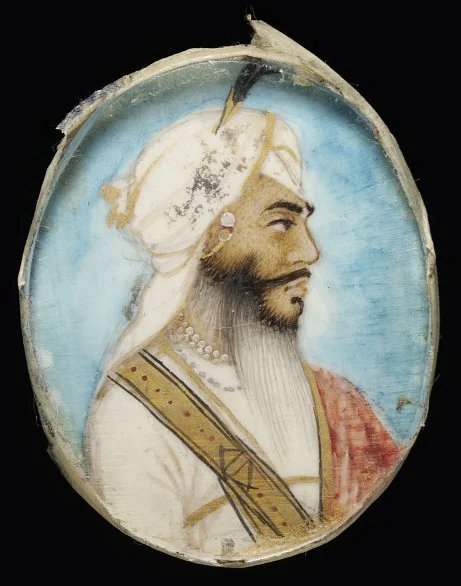 Raja Tej Singh · c.1846
Approved family history
Raja Tej Singh
The account begins with Khushhal Singh’s move from Ikri in the Meerut region to Lahore. He entered military service and became part of Ranjit Singh’s personal guard before rising to the influential post of chamberlain. The chapter connects Raja Tej Singh’s family with this household and its access to the Lahore court.
Read the history & source chapters →Approved family history
Rasaldar Hira Singh, Talwandi Randhawa
The book treats the Talwandi, Khunda and Chamiari houses as related Randhawa branches. It connects Talwandi’s foundation with Turga and describes hereditary local office before Santokh Singh and Sahib Singh joined the Kanhya misl. Dal Singh later served in Ranjit Singh’s campaigns, while parts of the older family estate passed under the Maharaja’s control.
Read the history & source chapters →Approved family history
Ratan Singh Kot Diwan Singh
The Kot Diwan Singh account follows Diwan Singh, Hukam Singh and Soba Singh through service under successive Sukarchakia rulers. It describes grants, campaigns and the retention of two villages after annexation on payment of a share of revenue. This 1865 entry remains separate where the tree comparison did not establish a sufficiently certain identity match.
Read the history & source chapters →Approved family history
Ratesh — the ruling family
Ratesh was a very small chiefship in the Shimla hills. The account explains how its territory was reduced during the Gurkha period and subsequent disputes with Keonthal and Balsan. The pedigree records Jit Singh’s descendants through the branches of Kishan, Bhawani and Moti Singh.
Read the history & source chapters →Approved family history
Rattan Chand, Dogal
The Dogal family account links Wazirabad with both religious activity and administrative service. Kishan Kaur served Gurbakhsh Singh Wazirabadia, and Shiv Dyal later managed territory for the Sukarchakia chiefs. His sons held revenue and financial appointments under Prince Kharak Singh and in Kashmir.
Read the history & source chapters →Approved family history
Rupar — the Virk chiefs of Rupnagar
Rupar, also known as Ropar or Rupnagar, was associated with Hari Singh and the Dallewalia chiefs. Its recorded family branches connect Rupar with Sialba and the wider Cis-Sutlej region.
Read the history & source chapters →Approved family history
Sahib Singh Isapuria
The Isapuria family is introduced as a Randhawa branch. Dasaunda Singh served Adina Beg and later joined the Bhangi confederacy, obtaining an estate that included Isapur. Ran Singh entered Ranjit Singh’s service, and Sahib Singh continued military employment under royal and Dogra commanders.
Read the history & source chapters →Approved family history
Sahib Singh, Karial
The Karial account locates this Virk family in the area between Sheikhupura and Miraliwala. Bhag Singh commanded the Wirkayat Horse under Ranjit Singh, and Jodh Singh succeeded him. After Jodh Singh’s death in the Kashmir campaign, Sahib Singh later obtained a command and smaller grants; his son Jawahir Singh also entered military service.
Read the history & source chapters →Approved family history
Sardar Amrik Singh, Chachi
This Chachi branch is connected with Nahal Singh’s marriage into Gurmukh Singh’s family and succession to the Chakori estate. Nahal Singh acted for the Lahore Darbar in dealings with British officials. The account emphasises his work during 1848–49 and records the grants that were maintained after annexation.
Read the history & source chapters →Approved family history
Sardar Arjan Singh (the late)
This account follows a family of administrators serving first the Kanhya chiefs and then Ranjit Singh. Harbhaj Rai entered judicial work after the absorption of Jaimal Singh’s estates. Hakim Rai later managed Prince Nau Nihal Singh’s affairs and held important frontier and judicial appointments, including responsibilities associated with Peshawar and Lahore.
Read the history & source chapters →For descendants, wherever life has taken you
Your family remembers what the books could not.
A missing name may be someone your grandparents remembered. An old photograph may be the only face a future generation ever sees. What feels ordinary to your family today can become a treasured part of tomorrow’s history.
Add a missing generation
Connect a parent, grandparent or branch you know.
Give a name a face
Share a family photograph, with permission and any known date.
Tell what happened next
Remember an ancestral home, school, journey or family tradition.
Start with one detail. You can return and add more. Include a source where possible, or clearly identify an oral memory. Submissions are reviewed before publication; living people’s details are shared only with their consent.
Help carry our story forward ↗