
Family stories
Family stories
The stories behind the names
A family history is more than a list of names. Read about ancestral homes, leadership, journeys and the changes that shaped each generation. Historical books begin the story; family memories, photographs and carefully sourced contributions help bring it closer to the present.
Explore this page ↓
Explore memories of ancestral homes, migration and life today. Published stories are submitted by families and reviewed by the site administrator.
Stories behind the family names
Read approved historical summaries and family memories. Source chapters and the complete account are linked from each story.
Approved family history
Sardar Balwant Singh, Botalia
The Botalia chapter associates the family’s rise with service under successive Sukarchakia chiefs. Dhana Singh served Nodh Singh and Charat Singh, and his sons acquired villages including Botala. The account also follows the Kunjahia branch, explaining the connection of its name with the Kunjah estate and describing later grants and resumptions.
Read the history & source chapters →Approved family history
Sardar Balwant Singh, Rangar Nanglia
The Rangar Nanglia chapter describes a family established at Rangar Nangal near Batala. Natha joined the Kanhya confederacy, while his son Karam Singh enlarged the family’s holdings and built up its presence in Amritsar. Karam Singh subsequently served Ranjit Singh; the book also recounts a dispute over soldiers’ unpaid wages and their eventual reconciliation.
Read the history & source chapters →Approved family history
Sardar Basant Singh Man of Moghalchak
The Moghalchak chapter places Basant Singh’s family among the Man houses prominent in Punjab history. It distinguishes the Moghalchak branch from related houses at Mananwala and elsewhere. Its opening discusses settlement and clan traditions; the accompanying pedigree records the recent branches represented in this family tree.
Read the history & source chapters →Approved family history
Sardar Bishan Singh, Randhawa, of Dodai
The Dodai account locates the family at Doda in the Shakargarh area and connects its settlement traditions with the Randhawas of Jhanda. Gurbakhsh Singh joined the Bhangi confederacy and acquired nearby territory. His son Sudh Singh extended the holdings; the narrative describes the family’s long conflict with the rulers of Jammu.
Read the history & source chapters →Approved family history
Sardar Fateh Khan, Khan Bahadar, of Kot
The Kot chapter describes the Ghebas’ position between the Indus and Sohan rivers. Their difficult terrain helped them preserve local authority while acknowledging stronger powers through tribute. Charat Singh made Rai Jalal tributary, but the book characterises early Sukarchakia control as limited and follows the later extension of Ranjit Singh’s administration.
Read the history & source chapters →Approved family history
Sardar Faujdar Singh, Panjhatha
The Panjhatha account traces military service across successive rulers. Dulcha Singh served Raja Ranjit Deo of Jammu; Ramdat Singh joined Mahan Singh’s Sukarchakia force. Later generations served Ranjit Singh. The narrative particularly notes Nadhan Singh’s participation in frontier campaigns and the grants associated with his service.
Read the history & source chapters →Approved family history
Sardar Hari Singh, Lamba
Gurmukh Singh’s career forms the centre of this Lamba account. Introduced into Mahan Singh’s household as a child, he became a companion of the young Ranjit Singh and later a trusted officer. The chapter follows his work as paymaster and commander, numerous campaigns and the estates granted for his service.
Read the history & source chapters →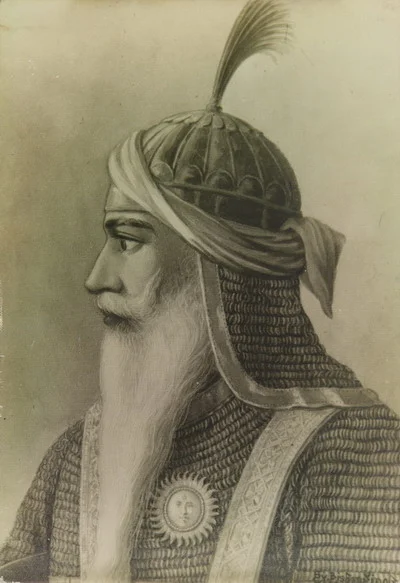 Sardar Hari Singh Nalwa · historical painting
Approved family history
Sardar Ichara Singh, Nalwa
The Nalwa chapter places Hari Singh’s early life at Gujranwala and follows his rise in Ranjit Singh’s army. It recounts service at Kasur, Multan and Kashmir, his grants in the Tiwana country, and his appointment as governor of Kashmir. The narrative connects the family’s later standing with his military and administrative career.
Read the history & source chapters →Approved family history
Sardar Jagat Singh, Kalas Bajwa
The second Kalas Bajwa chapter follows the other branch of the family. Khushal Singh served Sahib Singh of Gujrat and later retired rather than join Ranjit Singh. The Maharaja nevertheless recruited his sons; Gulab Singh entered artillery service. The account contrasts military distinction with the family’s more limited acquisition of landed power.
Read the history & source chapters →Approved family history
Sardar Kahar Singh, Lamba
The Lamba account follows Rai Maha Singh, Laja Singh and Amar Singh in Sukarchakia service. Amar Singh served successive chiefs and introduced his sons into the force. Mohar Singh acquired substantial estates before losing them after leaving for Benares; Dayal Singh’s later service helped recover part of the family’s position.
Read the history & source chapters →Approved family history
Sardar Kale Khan, Khatar, of Dhrek
The Dhrek chapter introduces the Khatar family through disputed traditions about Kutab Shah and the relationships of Khatars, Awans and Khokhars. The author distinguishes the genealogical Kutab Shah from the ruler Qutbuddin Aibak. Such early ancestry is uncertain and is not treated here as a verified sequence of parents and children.
Read the history & source chapters →Approved family history
Sardar Lahna Singh, Chimni
The Chimni account centres on Hukma Singh’s advancement in Ranjit Singh’s service. It describes his distinction at Kasur, administrative charge around Ramnagar and control of customs and salt revenues. The family name is explained through a nickname associated with his stature and agility. Later grants accompanied further military service.
Read the history & source chapters →For descendants, wherever life has taken you
Your family remembers what the books could not.
A missing name may be someone your grandparents remembered. An old photograph may be the only face a future generation ever sees. What feels ordinary to your family today can become a treasured part of tomorrow’s history.
Add a missing generation
Connect a parent, grandparent or branch you know.
Give a name a face
Share a family photograph, with permission and any known date.
Tell what happened next
Remember an ancestral home, school, journey or family tradition.
Start with one detail. You can return and add more. Include a source where possible, or clearly identify an oral memory. Submissions are reviewed before publication; living people’s details are shared only with their consent.
Help carry our story forward ↗