
Family stories
Family stories
The stories behind the names
A family history is more than a list of names. Read about ancestral homes, leadership, journeys and the changes that shaped each generation. Historical books begin the story; family memories, photographs and carefully sourced contributions help bring it closer to the present.
Explore this page ↓
Explore memories of ancestral homes, migration and life today. Published stories are submitted by families and reviewed by the site administrator.
Stories behind the family names
Read approved historical summaries and family memories. Source chapters and the complete account are linked from each story.
Approved family history
Surat Singh, Majithia
This Majithia branch followed the Sukarchakia chiefs and acquired territory in the Dhanni country. The account follows Izzat Singh, Sahaj Singh and Uttam Singh, then describes the surrender of important holdings to Ranjit Singh. Subsequent appointments and grants provided continuing roles for members of the family.
Read the history & source chapters →Approved family history
Tahal Singh, Mirpuria
The Mirpuria account centres on Mahan Singh’s service under Hari Singh Nalwa. It describes his campaigns at Multan, Kashmir and Peshawar and his command at Jamrud during the Afghan attack of 1837. The chapter follows the family’s grants and succession after the deaths of Mahan Singh and his son Chatar Singh.
Read the history & source chapters →Approved family history
Tegh Singh, Rosa
The short account of Tegh Singh Rosa records his service as a cavalry officer in the North-Western Provinces Military Police. It notes a wound received in 1859 and his discharge when the police system changed in 1861. The book says that his connection with the Attar Singh and Hardit Singh Rosa branches was distant.
Read the history & source chapters →Approved family history
Thanesar — the Kang chiefs
Thanesar’s chiefly family formed part of the Cis-Sutlej world. Brothers, spouses and separate branches are recorded distinctly, so a change of ruler does not create an invented generation.
Read the history & source chapters →Approved family history
The Bhangi Sirdars
This chapter describes the Bhangi confederacy and the chiefly families associated with it. It traces its development from an early force under Bhuma Singh to a larger territorial power under Hari Singh. The author offers alternative explanations for the name Bhangi; these are historical traditions rather than settled conclusions.
Read the history & source chapters →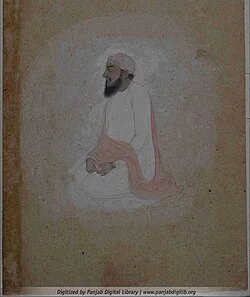 Fakir Azizuddin · historical miniature
Approved family history
The Fakir Family
The Fakir family account introduces the household of Azizuddin, Imamuddin and Nuruddin through their father Ghulam Mohiuddin and earlier Lahore connections. It recounts traditions linking the family with Uch, Chunian and a religious ancestor associated with Bukhara. These origins form the background to the family’s later prominence at the Lahore court.
Read the history & source chapters →Approved family history
The Gakhars of Domeli
The Domeli chapter places the family among the Askandral Gakhars of Jhelum. It describes the differing choices of Akbar Ali Khan and Fazal Dad Khan during the events of 1848, and the effects on their estates. Later passages emphasise the family’s continuing cavalry service and the careers of Fazal Dad’s sons.
Read the history & source chapters →Approved family history
The Nawabs of Multan
The Nawabs of Multan chapter opens with the history of the Saddozai Afghans and their connection with Kandahar. It traces the position of Saddo Khan and his descendants amid rivalry between Persian and Mughal power. The accompanying pedigree links this wider setting with the later Multan nawabs and their family branches.
Read the history & source chapters →Approved family history
Theog — the ruling family
Theog was a chiefship north-east of Shimla paying tribute to Keonthal. The chapter identifies Hari Chand as Bhup Singh’s son and records his appointment in 1856, before his father’s death in 1866. The chart also includes the branches of Nand Singh and Nitu Singh.
Read the history & source chapters →Approved family history
Utam Singh, Nakai
The book distinguishes the Nakai houses of Bahrwal and Gogaira, saying that their shared regional name did not establish a family relationship. This chapter follows Kamar Singh and Wazir Singh, their contests over Kot Kamalia and Sayadwala, and shifting alliances involving the Kanhya and Sukarchakia chiefs.
Read the history & source chapters →Approved family history
Wachan Singh, Tehtar
The Tehtar account traces the family through Char Singh and Lakha Singh’s service under Charat Singh Sukarchakia. Grants accompanied campaigns against rival chiefs. The chapter also recounts Shamir Singh’s role in fighting the Chatas, presenting military service as central to the family’s position.
Read the history & source chapters →For descendants, wherever life has taken you
Your family remembers what the books could not.
A missing name may be someone your grandparents remembered. An old photograph may be the only face a future generation ever sees. What feels ordinary to your family today can become a treasured part of tomorrow’s history.
Add a missing generation
Connect a parent, grandparent or branch you know.
Give a name a face
Share a family photograph, with permission and any known date.
Tell what happened next
Remember an ancestral home, school, journey or family tradition.
Start with one detail. You can return and add more. Include a source where possible, or clearly identify an oral memory. Submissions are reviewed before publication; living people’s details are shared only with their consent.
Help carry our story forward ↗