
Family stories
Family stories
The stories behind the names
A family history is more than a list of names. Read about ancestral homes, leadership, journeys and the changes that shaped each generation. Historical books begin the story; family memories, photographs and carefully sourced contributions help bring it closer to the present.
Explore this page ↓
Explore memories of ancestral homes, migration and life today. Published stories are submitted by families and reviewed by the site administrator.
Stories behind the family names
Read approved historical summaries and family memories. Source chapters and the complete account are linked from each story.
Approved family history
Bhareli — the Virk family of Bela
Bhareli’s Virk chiefs were also associated with Bela. The source links this house to Faridkot through Rani Narinder Kaur’s marriage to Raja Harinder Singh. This tree presents a selected deceased branch and records Bhagwant Singh’s reported Aitchison education.
Read the history & source chapters →Approved family history
Bhatiwind — the family of Milkha Singh
The Bhatiwind account traces Milkha Singh’s family through Sahib and Tara Singh to Jassa’s branch. It describes a transition from Bhangi-era chiefship to an estate under Ranjit Singh. The source’s unnamed royal marriage remains unlinked.
Read the history & source chapters →Approved family history
Bilaspur (Kahlur) royal family
Bilaspur, also called Kahlur, belongs in the wider Punjab hill-state archive. The government pedigree begins this segment with Ajmer Chand and separates the Devi Chand and Sakhat Chand branches. The later line runs through Narpat, Hira, Amar and Bije Chand. The district’s official history provides context for the former state and its later place within Himachal Pradesh.
Read the history & source chapters →Approved family history
Budh Singh, Matu
The Matu account connects the family with Guria Singh’s service under Charat Singh Sukarchakia and Sahju’s marriage to Dal Singh of Akalgarh. It recounts Sahju and Sahaj Singh’s defence of Akalgarh against Ranjit Singh. Later generations served in campaigns and held estates; the source also records adoption within the family.
Read the history & source chapters →Approved family history
Bushahr (Bashahr) royal family
Bushahr, spelled Bashahr in the pedigree, is part of the historical hill-state setting that extended towards Kinnaur. This starter follows the ruling branch from Udai and Ram Singh through Ugar and Mahindar to Shamsher Singh and his sons Raghunath and Padam Singh. It does not turn earlier origin traditions or a list of rulers into undocumented parent links.
Read the history & source chapters →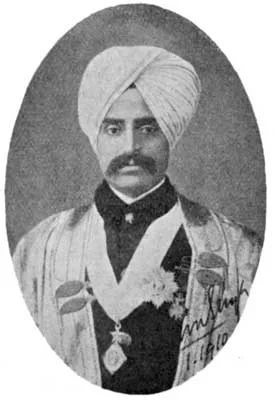 Raja Bhuri Singh of Chamba
Approved family history
Chamba royal family
Chamba is represented here by its later recorded royal branches, beginning with Ugar Singh. The chart follows Umed, Raj and Jit Singh to Charat Singh and distinguishes the Sri, Gopal and Suchet Singh branches. It also records a collateral Zorawar Singh line. The district history places the family within Chamba’s much longer political and cultural past.
Read the history & source chapters →Approved family history
Chanda Singh of Kot Diwan Singh, Sindhu
The Kot Diwan Singh account describes successive generations serving Mahan Singh and Ranjit Singh. Hukam Singh took part in several campaigns, and Soba Singh continued military service, including on the frontier. Later passages describe reduced estates and employment beyond Punjab, including service in Bengal and a family member in the Hong Kong police.
Read the history & source chapters →Approved family history
Chaudhri Ahmad Khan of Chakri
The Chakri chapter describes the leading Alpial family in the country along the Sohan. Sher Khan headed the family at annexation and was employed by Nicholson after the battle of Gujrat. The narrative follows local rivalries and later service. The author’s sweeping characterisations of the wider community are not endorsed here.
Read the history & source chapters →Approved family history
Chaudhri Bishan Das of Saidpur
The Saidpur family is described as having served the Gakhar chiefs as advisers and revenue managers. Ratan Chand helped secure the release of detained intermediaries in 1853 and later received a grant. Bishan Das succeeded to the family’s position; the book records his District Board work and support for education and horse breeding.
Read the history & source chapters →Approved family history
Chrat Singh, Kot Syad Mahmud
The Kot Sayad Mahmud family’s rise is connected with Rup Kaur’s marriage to Ranjit Singh. Grants and commands followed for Charat Singh and Bhup Singh. The chapter then describes military service, casualties and later reductions of the estate. Marriage dates and spellings should be checked across editions before treating them as settled facts.
Read the history & source chapters →Approved family history
Chuni Machhli — the Sandhu chief family
The linked account follows Majja Singh’s family through Dal and Kanh Singh to Jaswant and Tara Singh. It describes an estate in the Cis-Sutlej region. Family papers can add detail to this early historical branch.
Read the history & source chapters →Approved family history
Colonel Badri Nath
Colonel Badri Nath’s account records extensive military service on the frontier, including commands at Dera Ismail Khan and Tank. He served during the Multan campaign and retained responsibilities after annexation. The chapter notes his corps’ duties at Multan in 1857 and the pension awarded on his retirement in 1861.
Read the history & source chapters →For descendants, wherever life has taken you
Your family remembers what the books could not.
A missing name may be someone your grandparents remembered. An old photograph may be the only face a future generation ever sees. What feels ordinary to your family today can become a treasured part of tomorrow’s history.
Add a missing generation
Connect a parent, grandparent or branch you know.
Give a name a face
Share a family photograph, with permission and any known date.
Tell what happened next
Remember an ancestral home, school, journey or family tradition.
Start with one detail. You can return and add more. Include a source where possible, or clearly identify an oral memory. Submissions are reviewed before publication; living people’s details are shared only with their consent.
Help carry our story forward ↗