
Family stories
Family stories
The stories behind the names
A family history is more than a list of names. Read about ancestral homes, leadership, journeys and the changes that shaped each generation. Historical books begin the story; family memories, photographs and carefully sourced contributions help bring it closer to the present.
Explore this page ↓
Explore memories of ancestral homes, migration and life today. Published stories are submitted by families and reviewed by the site administrator.
Stories behind the family names
Read approved historical summaries and family memories. Source chapters and the complete account are linked from each story.
Approved family history
Diwan Ajodhia Parshad
Diwan Ajodhia Parshad’s family is described as having migrated from Kashmir into north Indian service. Mati Das obtained employment under the Delhi emperors, while Ganga Ram worked in the Gwalior administration under French officers. The chapter follows the family’s movement between courts and its experience of revenue work and political negotiation.
Read the history & source chapters →Approved family history
Diwan Dhanpat Rai
The Dhanpat Rai chapter follows a family of civil administrators from service connected with Nadir Shah into the Bhangi administration. Gutu Mal and Ram Kaur served Gujar Singh and Sahib Singh. Dhanpat Rai and his brothers later received Lahore appointments, military responsibilities and grants linked to service under Ranjit Singh.
Read the history & source chapters →Approved family history
Diwan Govind Sahai of Emanabad, Lamba
The Emanabad Lamba family is presented as an important administrative house of Jammu. Bishan Das served Mahan Singh, while Amir Chand became a managing agent for Gulab Singh. Jawala Sahai and Karpa Ram subsequently held senior offices, connecting the family’s history with the administration of Jammu and Kashmir.
Read the history & source chapters →Approved family history
Diwan Hari Singh, Akalgarhia
The Akalgarhia account begins with Hushnak Rai’s service under Dal Singh of Akalgarh. It follows the careers of his sons, particularly Nanak Chand and Sawan Mal, and introduces Mulraj’s place in the family history. Changes in control of Akalgarh led family members into wider revenue and administrative service under the Lahore state.
Read the history & source chapters →Approved family history
Diwan Hukm Chand, Pashoria
The Peshawari family held high office under rulers of Kabul and Peshawar. Gurbakhsh Rai served as diwan, and Thakar Das later became a senior official under Ahmad Shah and his successors. The chapter follows the family’s financial and administrative careers as changing politics brought members into Punjab service.
Read the history & source chapters →Approved family history
Diwan Jawahir Mal
The Bhera Diwan family is traced to Peshawar, where it held revenue and military appointments. The book warns that much early history survived only through oral tradition after family papers were lost. Sulakhan Mal and later relatives entered the service of Milkha Singh Thepuria and his successors, linking the family with Rawalpindi and Kashmir affairs.
Read the history & source chapters →Approved family history
Diwan Mohkam Chand
The Mohkam Chand chapter follows his move from clerical and estate management work into military leadership. He served Dal Singh of Akalgarh and then Sahib Singh of Gujrat before joining Ranjit Singh. The account describes the Maharaja’s recognition of his abilities and his early command of expeditions across the Sutlej.
Read the history & source chapters →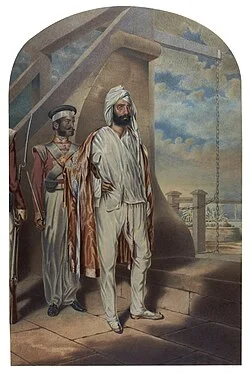 Diwan Mulraj in captivity · historical painting
Approved family history
Diwan Mulraj
The Mulraj chapter begins with Hushnak Rai’s employment under Dal Singh of Akalgarh and follows the careers of his sons. Nanak Chand entered wider service after Akalgarh came under Ranjit Singh. The opening also describes Ram Chand’s court appointment and charitable works, setting the family context for Sawan Mal and Mulraj.
Read the history & source chapters →Approved family history
Diwan Rattan Chand Darhiwalia
The Darhiwala account traces a family from Payal into revenue and clerical service. Jwala Nath worked for Charat Singh and Mahan Singh, while Karam Chand rose under Ranjit Singh. The chapter connects Karam Chand with diplomatic arrangements and the Lahore financial establishment, before following Tara Chand’s later administrative career.
Read the history & source chapters →Approved family history
Diwan Sant Ram, Emanabad
The Emanabad family held the office of kanungo over several generations. After changes brought by Sukarchakia expansion, Karam Chand advanced through revenue appointments under Ranjit Singh. He later managed estates for Dhian Singh and served Gulab Singh. The chapter follows the family’s changing employment and the contraction of some of its holdings.
Read the history & source chapters →Approved family history
Fakir Mahomed Khan, Sagri, of Makhad
The Makhad account follows the Sagri Pathan chiefs on both sides of the Indus. It identifies Ghulam Mustafa Khan as a leading figure before annexation and describes earlier connections with Ahmad Shah’s administration. Changes from tribute and military service to revenue settlements affected the family’s income from land, customs and river crossings.
Read the history & source chapters →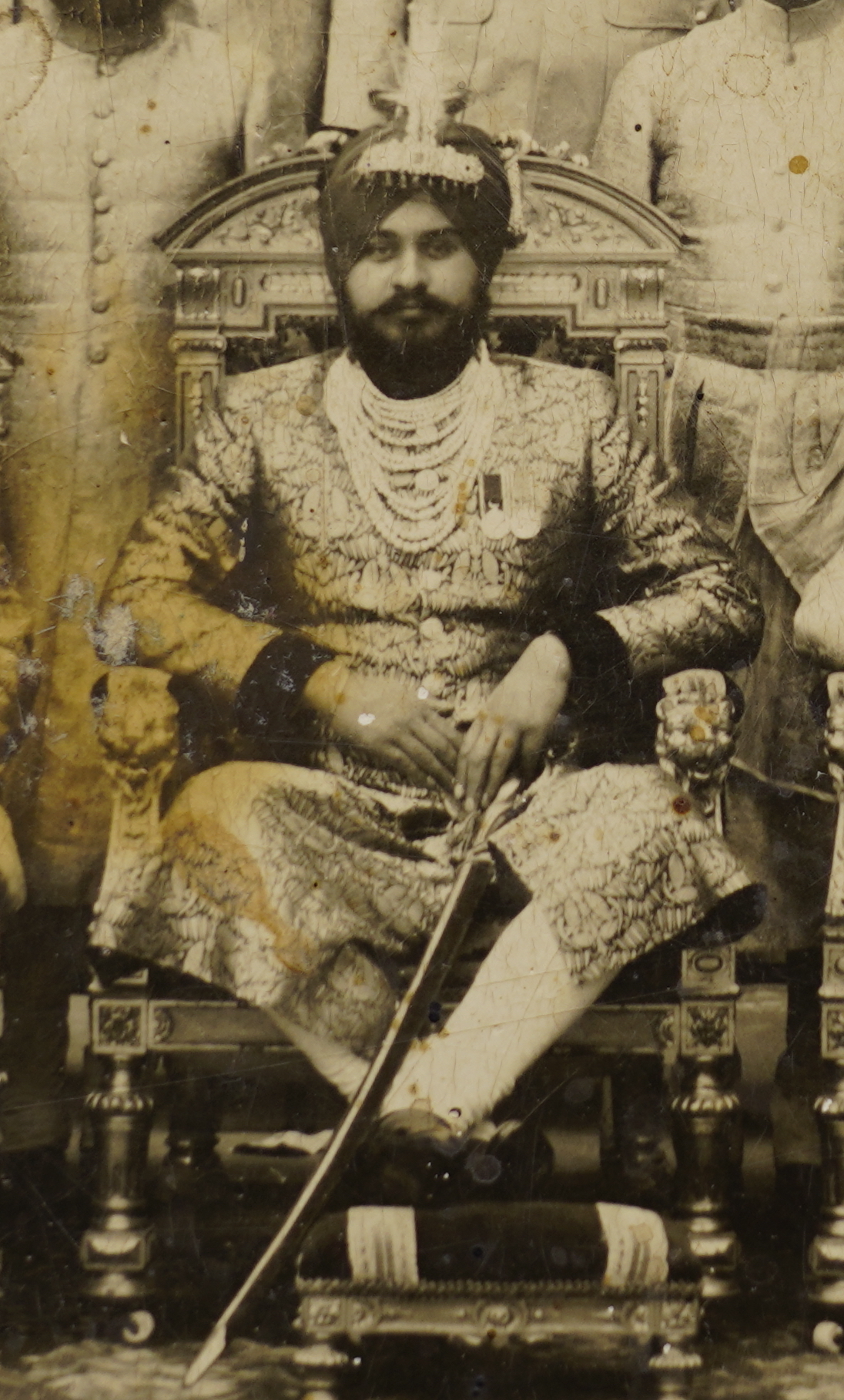 Raja Harinder Singh
Approved family history
Faridkot royal family
The Faridkot ruling house grew from the Brar chiefs of the Kot Kapura region. Its pedigree follows Hamir Singh and his descendants through Charat Singh, Gulab Singh and Pahar Singh. During the expansion of the Lahore kingdom, Faridkot was taken by Ranjit Singh and subsequently restored under British intervention in the Cis-Sutlej settlement. The nineteenth-century account describes Pahar Singh’s support for the British in the First Anglo-Sikh War and his recognition as Raja in 1846. Wazir Singh, Bikram Singh and Balbir Singh followed. The family’s…
Read the history & source chapters →For descendants, wherever life has taken you
Your family remembers what the books could not.
A missing name may be someone your grandparents remembered. An old photograph may be the only face a future generation ever sees. What feels ordinary to your family today can become a treasured part of tomorrow’s history.
Add a missing generation
Connect a parent, grandparent or branch you know.
Give a name a face
Share a family photograph, with permission and any known date.
Tell what happened next
Remember an ancestral home, school, journey or family tradition.
Start with one detail. You can return and add more. Include a source where possible, or clearly identify an oral memory. Submissions are reviewed before publication; living people’s details are shared only with their consent.
Help carry our story forward ↗