
Family stories
Family stories
The stories behind the names
A family history is more than a list of names. Read about ancestral homes, leadership, journeys and the changes that shaped each generation. Historical books begin the story; family memories, photographs and carefully sourced contributions help bring it closer to the present.
Explore this page ↓
Explore memories of ancestral homes, migration and life today. Published stories are submitted by families and reviewed by the site administrator.
Stories behind the family names
Read approved historical summaries and family memories. Source chapters and the complete account are linked from each story.
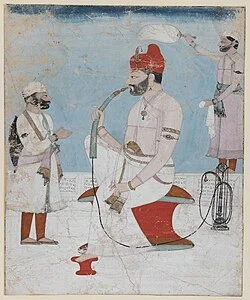 Raja Sansar Chand of Kangra · c.1800–1810
Approved family history
Kangra Katoch family of Lambagraon
The Lambagraon pedigree preserves a Katoch branch of Kangra. Tegh Chand’s sons Sansar, Fateh and Man Chand form separate branches; the later Partap and Jai Chand line is recorded under Fateh Chand through Ludar Chand. Keeping that collateral line visible prevents the later chiefs from being incorrectly attached as direct sons of Sansar Chand.
Read the history & source chapters →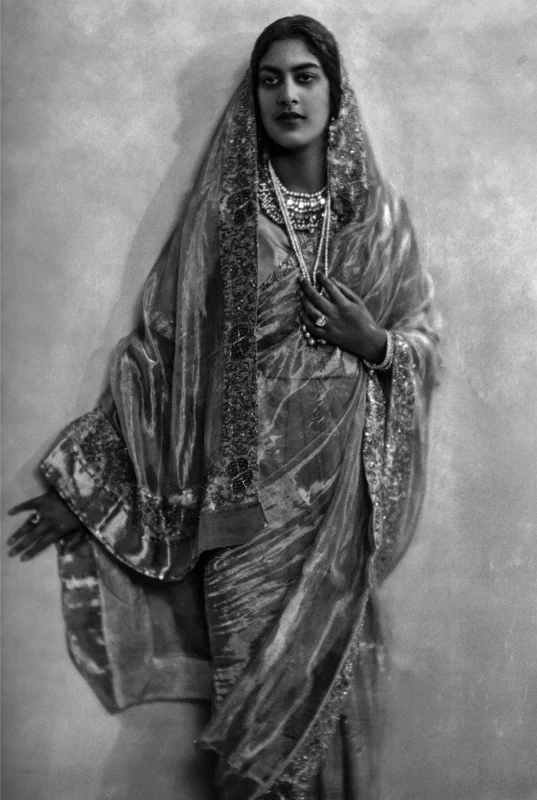 Rani Amrit Kaur of Mandi · Lafayette portrait, 1924
Approved family history
Kapurthala — the Ahluwalia royal house
The Ahluwalia name recalls Ahlu, a village near Lahore. Jassa Singh became one of the leading Sikh commanders of the eighteenth century, guiding the misls through periods of conflict and supporting the rebuilding of the Harmandir Sahib. His family history should be read separately from the succession of chiefs: after his death in 1783, leadership passed to his kinsman Bhag Singh, followed by Bhag’s son Fateh Singh. Fateh’s alliance with Ranjit Singh connected Kapurthala to the politics of the Sikh kingdom. Later rulers included Nihal,…
Read the history & source chapters →Approved family history
Karam Ilahi, Chata
The Chata chapter describes a community concentrated in the Hafizabad and Wazirabad areas and spread along the Chenab. It records traditions of migration and the foundation of several villages. The opening pedigree contains multiple branches, but damaged sections of the scan should not be used to infer relationships that cannot be read clearly.
Read the history & source chapters →Approved family history
Karam Singh, Sidhu
The Sidhu account follows several branches associated with Kapur Singh and his sons. Sukha Singh, Lakha Singh and Jodh Singh acquired separate estates. Jodh Singh became an important ally of Ranjit Singh around the occupation of Lahore in 1799, and the book describes his continued possession of substantial holdings.
Read the history & source chapters →Approved family history
Kazi Fateh Ahmad of Gondal
The Gondal account associates Mahomed Sadik with the foundation of Fatuchak, Gondal and other settlements near Attock. His learning brought the office of kazi, which later became a hereditary title without judicial power. Ghulam Mahomed and Fazal Ahmad subsequently acted as agents in frontier dealings under the Lahore state.
Read the history & source chapters →Approved family history
Kirpal Singh, Chichahwala
The Chichahwala chapter associates the family with the Sindhu settlement of Chichah. Dewa Singh adopted the Sikh faith during a period of persecution, while Nodh Singh later served Gujar Singh Bhangi and acquired villages around Daska and Gujrat. The narrative follows the succession and conflicts that affected these holdings.
Read the history & source chapters →Approved family history
Kishan Singh, Bhilowal
The Bhilowal account describes an estate acquired by Budha Singh and contested among later relatives. Jai Singh and his descendants retained a portion before Ranjit Singh absorbed the wider holdings and substituted service grants. Kishan Singh’s later position is recorded through the consequences of the events of 1848–49.
Read the history & source chapters →Approved family history
Koti — the ruling family
Koti was a tributary of Keonthal. Hari Chand received the title of Rana after the events of 1857, and the pedigree records his sons Bishan Chand and Shib Saran Singh and their children.
Read the history & source chapters →Approved family history
Kumharsain — the ruling family
Kumharsain, printed as Kamharsen, lay on the left bank of the Sutlej near Narkanda. After the Gurkha War the chiefship received recognition in 1815. The book describes its later restoration to Paritam Singh and follows his descendants through Bhawani and Hira Singh.
Read the history & source chapters →Approved family history
Kuthar — the ruling family
Kuthar, printed as Kothar, was a small hill state formerly associated with Keonthal. Jai Chand succeeded his father Bhup Chand in 1858. Massy describes the estate and its place within the network of neighbouring hill chiefships.
Read the history & source chapters →Approved family history
Ladwa — Gurdit Singh and his descendants
Ladwa’s chiefs belonged to the Cis-Sutlej political landscape. Gurdit Singh and his son Ajit Singh connect the estate’s history with the Sikh confederacies and the First Anglo-Sikh War. Further branches need documentary corroboration.
Read the history & source chapters →Approved family history
Lala Basheshar Singh
Basheshar Singh is introduced as a member of the Chamiari Patni branch of the Bhandari family. The chapter opens with a tradition connecting Rai Bhag Mal with Baba Farid at Pakpattan and explaining the names of different Bhandari branches. It then turns to the family’s documented service, including Anand Singh’s appointment through Diwan Mohkam Chand’s influence.
Read the history & source chapters →For descendants, wherever life has taken you
Your family remembers what the books could not.
A missing name may be someone your grandparents remembered. An old photograph may be the only face a future generation ever sees. What feels ordinary to your family today can become a treasured part of tomorrow’s history.
Add a missing generation
Connect a parent, grandparent or branch you know.
Give a name a face
Share a family photograph, with permission and any known date.
Tell what happened next
Remember an ancestral home, school, journey or family tradition.
Start with one detail. You can return and add more. Include a source where possible, or clearly identify an oral memory. Submissions are reviewed before publication; living people’s details are shared only with their consent.
Help carry our story forward ↗