
Family trees
Family trees
Who were Punjab’s chiefs?
Punjab’s chiefs included rulers, military leaders and heads of estates. Their families belonged to different houses and communities across the plains and hill states of historical Punjab. Follow the recorded generations, discover a familiar name and help fill the gaps in your family’s story.
Explore this page ↓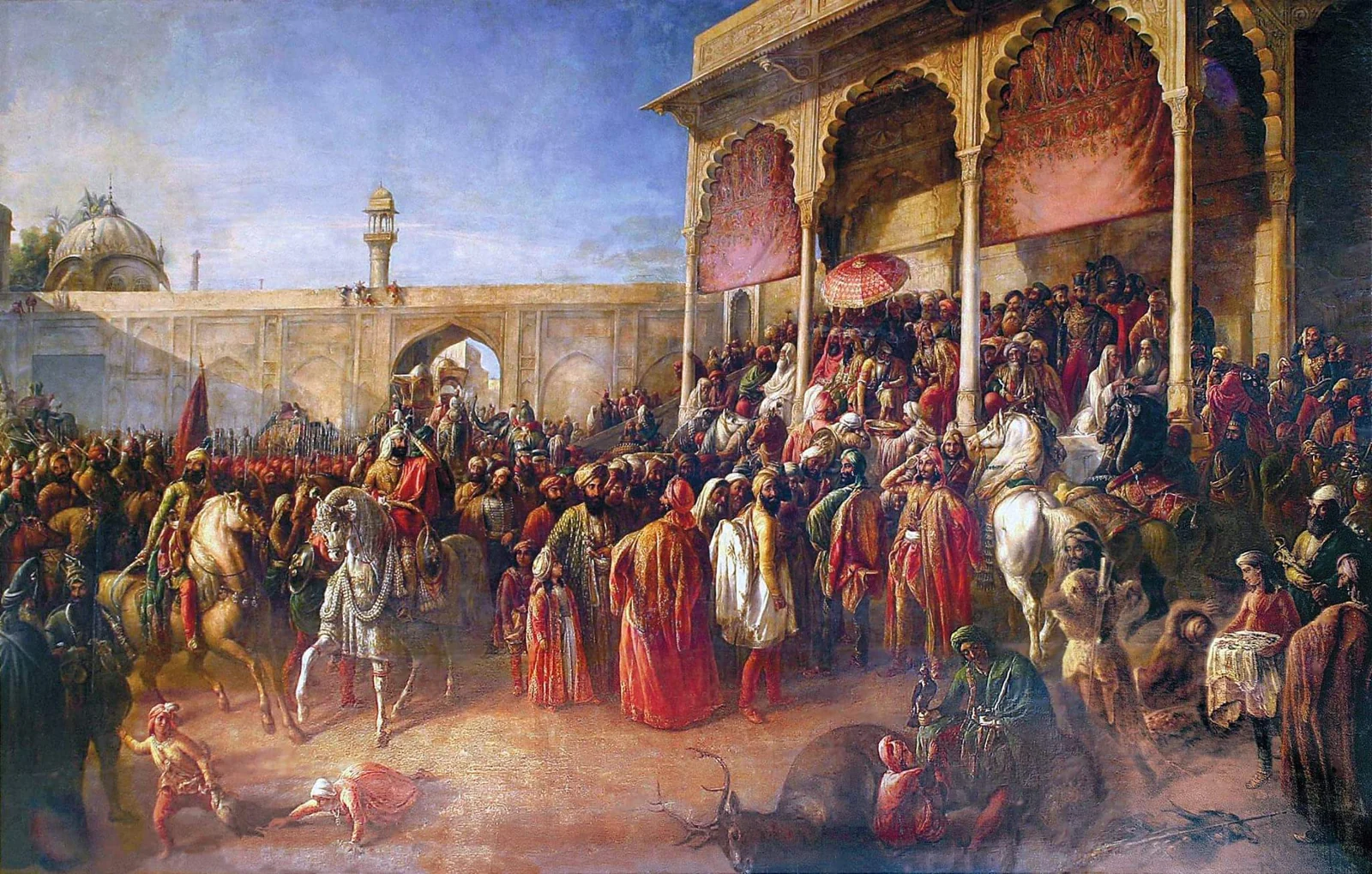
Find your place in the archive
Explore a shared inheritance
Search by family, chief or place, or explore a regional collection. These histories span the plains and hill states of historical Punjab.
Himachal & Punjab hill states
Baghal royal family
Arki and former Baghal State, Himachal Pradesh · Himachal & Punjab hill states
Baghal is a hill-state house associated with Arki. The pedigree begins the selected segment with Jagat Singh and separates Raghunath Singh’s branch from the Sheo Saran Singh branch. The later ruling segment…
19 public profiles · Reviewed family archive
Explore family →Himachal & Punjab hill states
Bedi family of Una
Una, historically in Hoshiarpur district; now Himachal Pradesh · Himachal & Punjab hill states
The Bedi house of Una appears in the government volume under historical Hoshiarpur district. Its chart follows Baba Kali Dhari, Jit Singh and Sahib Singh into the Bikram and Sujan Singh branches.…
17 public profiles · Reviewed family archive
Explore family →Himachal & Punjab hill states
Bhajji — the ruling family
Bhajji · Himachal & Punjab hill states
Bhajji, printed as Bhaji, was a hill state north of Shimla with its chief town at Suni. The 1890 account follows the family from Amrit Pal through Rudar Pal and Ran Bahadar…
6 public profiles · Reviewed family archive
Explore family →Himachal & Punjab hill states
Bilaspur (Kahlur) royal family
Bilaspur / Kahlur, Himachal Pradesh · Himachal & Punjab hill states
Bilaspur, also called Kahlur, belongs in the wider Punjab hill-state archive. The government pedigree begins this segment with Ajmer Chand and separates the Devi Chand and Sakhat Chand branches. The later line…
13 public profiles · Reviewed family archive
Explore family →Himachal & Punjab hill states
Bushahr (Bashahr) royal family
Rampur Bushahr and Kinnaur, Himachal Pradesh · Himachal & Punjab hill states
Bushahr, spelled Bashahr in the pedigree, is part of the historical hill-state setting that extended towards Kinnaur. This starter follows the ruling branch from Udai and Ram Singh through Ugar and Mahindar…
15 public profiles · Reviewed family archive
Explore family →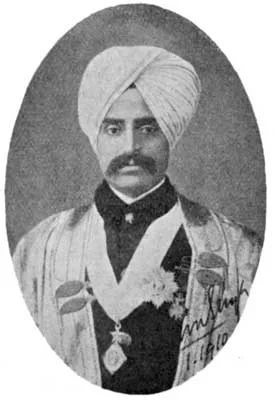 Raja Bhuri Singh of Chamba
Himachal & Punjab hill states
Chamba royal family
Chamba, Himachal Pradesh · Himachal & Punjab hill states
Chamba is represented here by its later recorded royal branches, beginning with Ugar Singh. The chart follows Umed, Raj and Jit Singh to Charat Singh and distinguishes the Sri, Gopal and Suchet…
19 public profiles · Reviewed family archive
Explore family →Himachal & Punjab hill states
Dalthi (Delath) — the ruling family
Dalthi (Delath) · Himachal & Punjab hill states
Dalthi, also known as Delath, was a small chiefship paying tribute to Bashahr. The 1890 pedigree follows Paritam Singh and Padam Singh through the branches of Sansar, Barekam and Nahal Singh.
11 public profiles · Reviewed family archive
Explore family →Himachal & Punjab hill states
Dhami — the ruling family
Dhami · Himachal & Punjab hill states
Dhami lay west of Shimla near Jatog. The book describes Gobardhan Singh’s part in the conflict with the Gurkhas and his later chiefship. Fatah Singh succeeded him in 1867. The chart includes…
10 public profiles · Reviewed family archive
Explore family →Himachal & Punjab hill states
Ghund — the ruling family
Ghund · Himachal & Punjab hill states
Ghund was a small hill chiefship paying tribute to Keonthal. Massy’s pedigree records Ram Das, his son Bhajnu and Bhajnu’s son Kishan Singh. The account describes the estate’s administrative position in 1890.
3 public profiles · Reviewed family archive
Explore family →Himachal & Punjab hill states
Kanaiti — the ruling family
Kanaiti · Himachal & Punjab hill states
Kanaiti lay between Narkanda and Kotguru and was a tributary of Bashahr. Its chief also held Deori. The chapter describes an agreement in 1886 to replace revenue collected in kind with cash…
7 public profiles · Reviewed family archive
Explore family →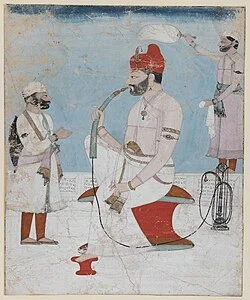 Raja Sansar Chand of Kangra · c.1800–1810
Himachal & Punjab hill states
Kangra Katoch family of Lambagraon
Lambagraon, Kangra, Himachal Pradesh · Himachal & Punjab hill states
The Lambagraon pedigree preserves a Katoch branch of Kangra. Tegh Chand’s sons Sansar, Fateh and Man Chand form separate branches; the later Partap and Jai Chand line is recorded under Fateh Chand…
18 public profiles · Reviewed family archive
Explore family →Himachal & Punjab hill states
Koti — the ruling family
Koti · Himachal & Punjab hill states
Koti was a tributary of Keonthal. Hari Chand received the title of Rana after the events of 1857, and the pedigree records his sons Bishan Chand and Shib Saran Singh and their…
6 public profiles · Reviewed family archive
Explore family →For descendants, wherever life has taken you
Your family remembers what the books could not.
A missing name may be someone your grandparents remembered. An old photograph may be the only face a future generation ever sees. What feels ordinary to your family today can become a treasured part of tomorrow’s history.
Add a missing generation
Connect a parent, grandparent or branch you know.
Give a name a face
Share a family photograph, with permission and any known date.
Tell what happened next
Remember an ancestral home, school, journey or family tradition.
Start with one detail. You can return and add more. Include a source where possible, or clearly identify an oral memory. Submissions are reviewed before publication; living people’s details are shared only with their consent.
Help carry our story forward ↗