
Family trees
Kapurthala — the Ahluwalia royal house
Who were Punjab’s chiefs?
Punjab’s chiefs included rulers, military leaders and heads of estates. Their families belonged to different houses and communities across the plains and hill states of historical Punjab. Follow the recorded generations, discover a familiar name and help fill the gaps in your family’s story.
Explore this page ↓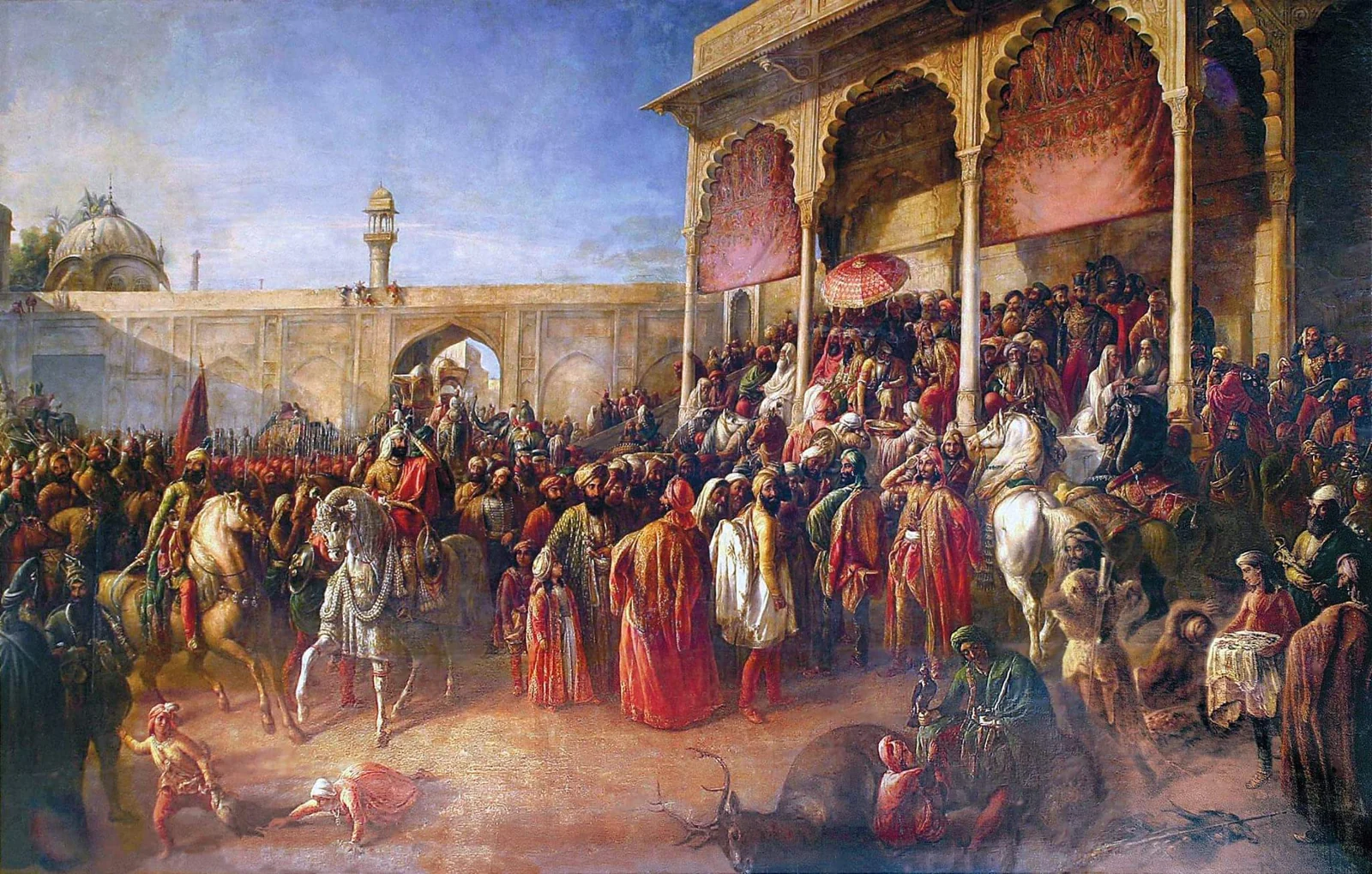
A family across generations
Explore the people behind the story
Follow the recorded branches, open a person’s profile and read the historical sources. Help carry the story forward with a photograph, a memory or a sourced correction.
Read the family history and source chapters
A chapter from the historical record
Read this family’s chapter in Massy’s Chiefs and Families of Note (1890) — printed page 34, PDF page 52.
This period account describes the family as recorded in 1890. Read it alongside the later sources and family corrections below; it does not establish today’s head of family or current addresses.
Kapurthala — the Ahluwalia royal house
- Misl
- Ahluwalia
- Chief / historical figure
- Sardar Jassa Singh Ahluwalia
- Ancestral home
- Kapurthala
- Region
- Historical Punjab
- Historical district
- Kapurthala
- Historical connection
- Not specified
Historical connections
Source-attributed historical collection. Rulership and succession do not establish parentage.
Our family story
The Ahluwalia name recalls Ahlu, a village near Lahore. Jassa Singh became one of the leading Sikh commanders of the eighteenth century, guiding the misls through periods of conflict and supporting the rebuilding of the Harmandir Sahib. His family history should be read separately from the succession of chiefs: after his death in 1783, leadership passed to his kinsman Bhag Singh, followed by Bhag’s son Fateh Singh.
Fateh’s alliance with Ranjit Singh connected Kapurthala to the politics of the Sikh kingdom. Later rulers included Nihal, Randhir, Kharak and Jagatjit Singh. The royal house also developed collateral branches, whose lives included military service, musical patronage and public work. Rajkumari Amrit Kaur, from Harnam Singh’s branch, became independent India’s first Health Minister and helped establish AIIMS. She was a different person from Jagatjit Singh’s daughter, the Rani of Mandi.
Jagatjit’s reign brought civic and educational changes and the architecture for which Kapurthala is remembered. Integration into PEPSU in 1948 ended princely state administration. Paramjit and later Sukhjit represent succession within the former ruling family. Present generations are part of a continuing family story: photographs, letters, school records and sourced corrections can help connect the names to the lives they lived.
Sources & references
https://kapurthala.gov.in/history/
https://saanjh.org/wp-content/uploads/2017/04/Sardar_Jassa_Singh_Ahluwalia-1.pdf
https://gurmatveechar.com/books/English_Books/English_Thesis_Papers/The.Rise.And.Fall.Of.Ahluwalia.Misal.(GurmatVeechar.com).pdf
https://jatchiefs.com/dynasties/alhuwalia-dynasty-states/kapurthala/
https://www.casemine.com/judgement/in/58117ff52713e17947965db3
https://eprints.soas.ac.uk/40269/1/Singh_2023.pdf
https://aiims.edu/index.php/en/about-us
https://oldshirburnian.org.uk/school-archives-news/45088/
Source and relationship notes
Reviewed 9 October 2026. Earlier ancestry is source-reported, not proof of a legendary Jaisalmer connection. Bhag Singh is linked to Ladha, never as Jassa Singh’s son; descriptions of their kinship differ. Jassa Singh’s two daughters are recorded in the history, but conflicting names and husbands are not invented as settled profiles. Fateh’s death (1836/1837), Kharak’s birth (1849/1850), and Amrit Kaur’s birth (1887/1889) remain disputed. Jasjit is placed under Pratap, supported by the individual biography and SOAS research. Gita is placed beside Sukhjit, supported by the court record, rather than under Paramjit. Living-status uncertainty is explicitly retained. The administrator confirmed permission for all living Ahluwalia/Kapurthala relatives on 9 October 2026. Remaining collateral branches, unnamed relatives and inconsistent source dates require further documentary checking; this is not a certified complete pedigree.
People & generations
Follow parent links to move through generations. Only profiles approved for public display appear here.
Generation 1
Bhai Saina Singh
Born: Not recorded
Died: Not recorded
Early ancestry reported in Ganda Singh’s account, chapter 1; this is a historical tradition, not proof of remote royal descent.
Generation 2
Bhai Wadhava Singh
Born: Not recorded
Died: Not recorded
Parent (recorded): Bhai Saina Singh
Generation 3
Bhai Ganda Singh
Born: Not recorded
Died: Not recorded
Parent (recorded): Bhai Wadhava Singh
Generation 4
Sadhu Singh Ahluwalia
Born: Not recorded
Died: Not recorded
Parent (recorded): Bhai Ganda Singh
The family name is associated with Ahlu, near Lahore.
Generation 5
Gopal Singh Ahluwalia
Born: Not recorded
Died: Not recorded
Parent (recorded): Sadhu Singh Ahluwalia
Hemu Singh
Born: Not recorded
Died: Not recorded
Parent (recorded): Sadhu Singh Ahluwalia
Sikandar Singh
Born: Not recorded
Died: Not recorded
Parent (recorded): Sadhu Singh Ahluwalia
Chaha Singh
Born: Not recorded
Died: Not recorded
Parent (recorded): Sadhu Singh Ahluwalia
Generation 6
Deva Singh Ahluwalia
Born: Not recorded
Died: Not recorded
Parent (recorded): Gopal Singh Ahluwalia
Generation 7
Gurbaksh Singh Ahluwalia
Born: Not recorded
Died: Not recorded
Parent (recorded): Deva Singh Ahluwalia
Sardar Singh Ahluwalia
Born: Not recorded
Died: Not recorded
Parent (recorded): Deva Singh Ahluwalia
Bhai Badar Singh Ahluwalia
Born: Not recorded
Died: 1722
Parent (recorded): Deva Singh Ahluwalia
Generation 8
Sardar Jassa Singh Ahluwalia
Born: 3 May 1718
Died: 20 Oct 1783
Parent (recorded): Bhai Badar Singh Ahluwalia
Reported as Jassa Singh’s wife in the research thesis, printed page 76. Dates are not established.
A leading Sikh commander of the eighteenth century and a central figure in the Ahluwalia chiefship. Ganda Singh records his birth on 3 May 1718 and death on 20 October 1783. His mother’s religious teaching and his association with Mata Sundari shaped his early life. Two daughters are reported; their names and marriage identifications differ between sources. Bhag Singh inherited leadership, not a father-to-son relationship.
Kirpal Singh Ahluwalia
Born: Not recorded
Died: Not recorded
Parent (recorded): Gurbaksh Singh Ahluwalia
Lal Singh Ahluwalia
Born: Not recorded
Died: Not recorded
Parent (recorded): Sardar Singh Ahluwalia
Mana Singh Ahluwalia
Born: Not recorded
Died: Not recorded
Parent (recorded): Sardar Singh Ahluwalia
Generation 9
Bhai Ladha Singh Ahluwalia
Born: Not recorded
Died: Not recorded
Parent (recorded): Kirpal Singh Ahluwalia
Mahar Singh Ahluwalia
Born: Not recorded
Died: Not recorded
Parent (recorded): Lal Singh Ahluwalia
Generation 10
Raja Bhag Singh
Born: Not recorded
Died: 1801
Parent (recorded): Bhai Ladha Singh Ahluwalia
Succeeded Jassa Singh in 1783. Sources describe him as a kinsman, variously cousin or nephew; Ladha Singh is recorded as his father. The precise kinship terminology remains disputed.
Generation 11
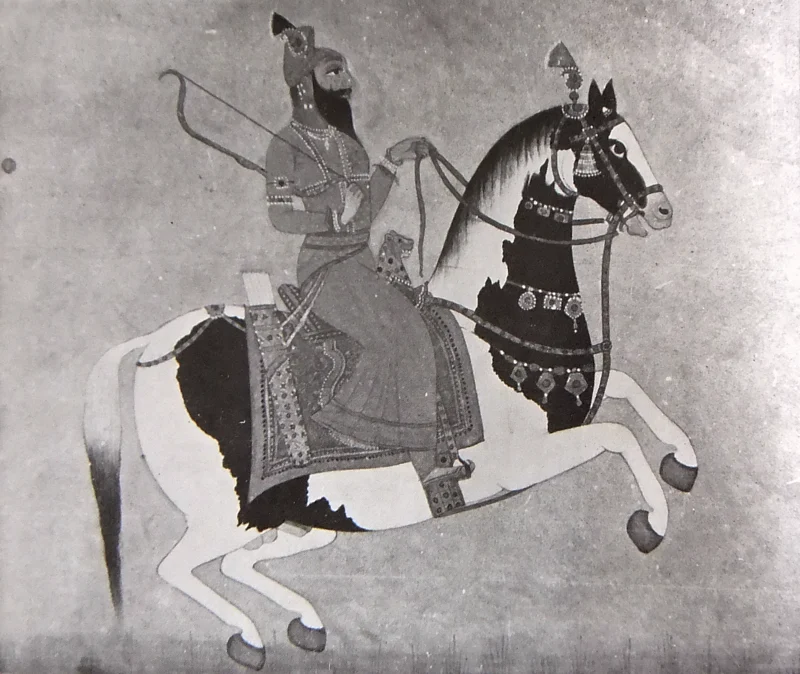
Raja Fateh Singh
Born: 1784
Died: Not recorded
Parent (recorded): Raja Bhag Singh
Bhag Singh’s son and successor. Allied with Ranjit Singh and joined him in the 1806 agreement with the East India Company. Sources disagree between 1836 and 1837 for his death; no single death date is asserted.
Generation 12
Raja Nihal Singh
Born: Not recorded
Died: 1852
Parent (recorded): Raja Fateh Singh
Fateh Singh’s son. Ruled during the Anglo-Sikh wars and died in 1852. Randhir, Bikrama and Suchet are recorded as his sons in the historical evidence reproduced in the court judgment.
Sardar Amar Singh
Born: Not recorded
Died: 28 Mar 1841
Parent (recorded): Raja Fateh Singh
Rani Raghubir Kaur
Born: Not recorded
Died: Not recorded
Parent (recorded): Raja Fateh Singh
Spouse link reported by the genealogical directory; no disputed execution date copied.
Recorded marriage connects Kapurthala with Ballabgarh.
Generation 13
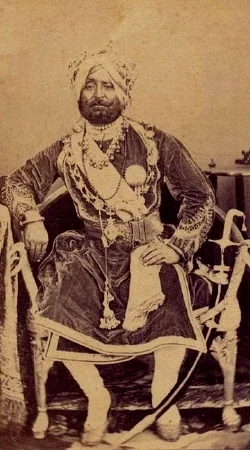
Raja Randhir Singh
Born: 1831
Died: 1870
Parent (recorded): Raja Nihal Singh
Nihal Singh’s eldest son. Succeeded in 1852 and led Kapurthala troops during the events of 1857. Kharak and Harnam are distinct sons.
Kunwar Bikrama Singh
Born: 1835
Died: 1887
Parent (recorded): Raja Nihal Singh
The collateral branch associated with Kapurthala’s musical patronage. Research traces Pratap and Daljit to him.
Kunwar Suchet Singh
Born: Not recorded
Died: Not recorded
Parent (recorded): Raja Nihal Singh
Generation 14
Raja Kharak Singh
Born: Not recorded
Died: 1877
Parent (recorded): Raja Randhir Singh
Randhir Singh’s eldest son; succeeded in 1870. His son Jagatjit inherited the chiefship in 1877. His birth is variously reported as 1849 or August 1850; left unresolved here.
Kunwar Pratap Singh
Born: 1871
Died: 1911
Parent (recorded): Kunwar Bikrama Singh
Raja Sir Daljit Singh
Born: 1882
Died: 1946
Parent (recorded): Kunwar Bikrama Singh
Raja Sir Harnam Singh
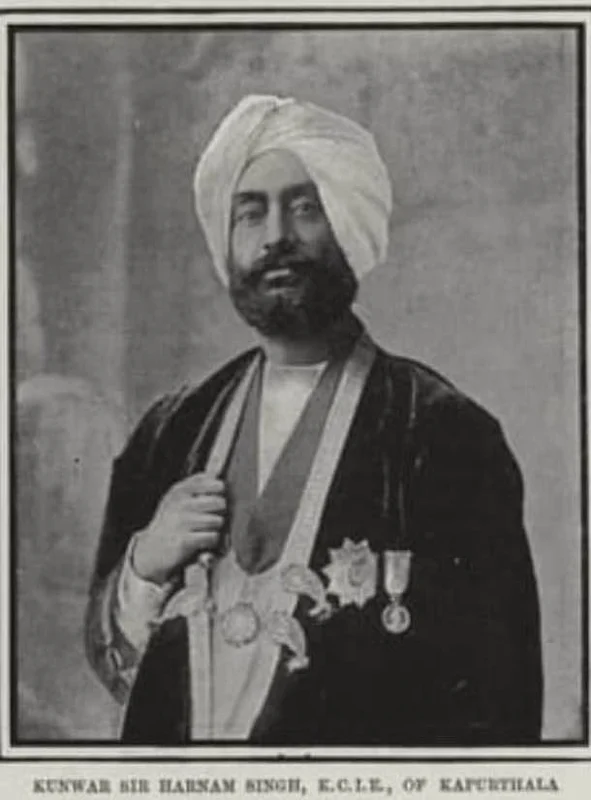
Born: 15 Nov 1851
Died: 20 May 1930
Parent (recorded): Raja Randhir Singh
Partner sources
Younger son of Randhir Singh. His branch includes Rajkumari Amrit Kaur. His contemporary obituary records his death at Shimla on 20 May 1930.
Generation 15
Maharaja Jagatjit Singh
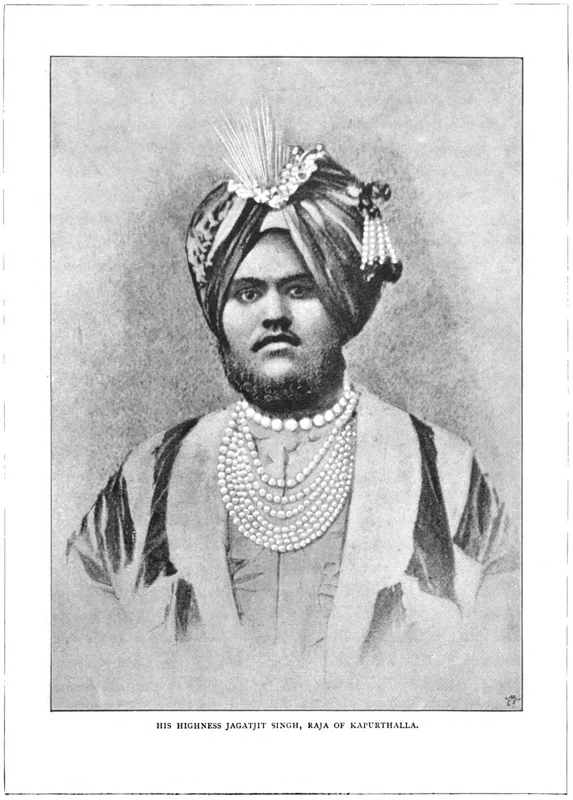
Born: 24 Nov 1872
Died: 1949
Parent (recorded): Raja Kharak Singh
Partner sources
https://jatchiefs.com/maharaja-paramjit-singh-of-kapurthala/
Rani Kanari was a wife of Maharaja Jagatjit Singh of Kapurthala and the mother of Amrit Kaur, who became the Rani of Mandi. A historical photograph by Paul Boyer shows Kanari alongside Jagatjit Singh in the 1890s. The Lafayette archive identifies her as the mother…
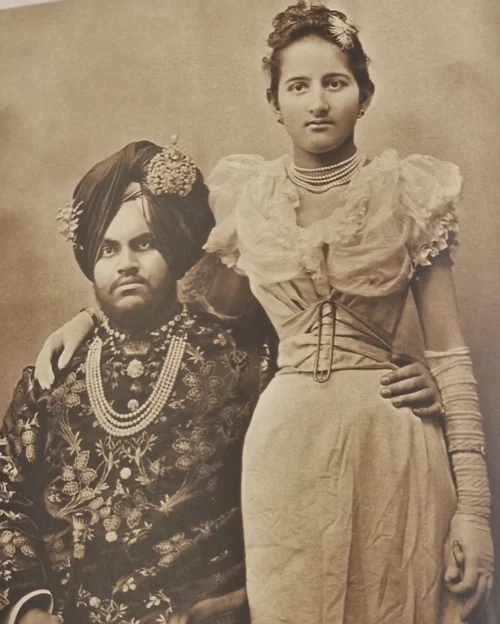
Succeeded as a child in 1877 and assumed full ruling powers in 1890. His reign brought civic improvements, educational reforms and distinctive architecture to Kapurthala. The state joined PEPSU in 1948. His education was chiefly with private tutors; this is not evidence of attendance at the Sainik School now occupying his palace.
Major Sardar Jasjit Singh
Born: 12 Apr 1893
Died: 29 Mar 1943
Parent (recorded): Kunwar Pratap Singh
School / institution: Aitchison College, Lahore
His father was Pratap Singh. The main directory places him under Nihal Singh in error; Nihal died in 1852.
Raja Padamjit Singh
Born: 1909
Died: 1971
Parent (recorded): Raja Sir Daljit Singh
Rajkumari Amrit Kaur — Health Minister
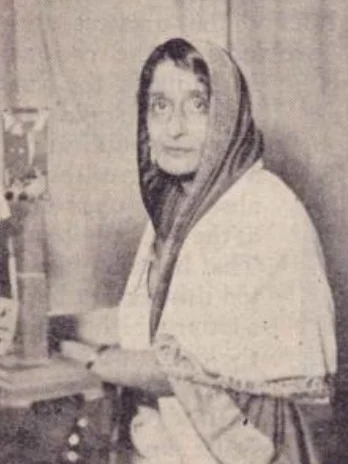
Born: 2 February (year disputed: 1887 or 1889)
Died: 6 Feb 1964
Parent (recorded): Raja Sir Harnam Singh
Parent (recorded): Rani Priscilla Kaur (Priscilla Golaknath)
School / institution: Sherborne Girls, Dorset
Attendance: 1902–1905
Daughter of Raja Sir Harnam Singh and Rani Priscilla Kaur of Kapurthala, Rajkumari Amrit Kaur became India’s first Health Minister. She worked with Mahatma Gandhi and helped shape public health services after independence. In 1950 she served as President of the World Health Assembly. Her work to establish AIIMS brought together medical education, research and patient care; she became its first President in 1957 and remained in that role until her death in 1964. She also gave her Shimla home, Manorville, to the institute for doctors and nurses to use. The school archive confirms attendance at Sherborne Girls in 1902–1905. Sources differ on her birth year. She is distinct from Jagatjit Singh’s daughter, Amrit Kaur, the Rani of Mandi.
Sources
https://oldshirburnian.org.uk/school-archives-news/45088/
https://newindiasamachar.pib.gov.in/WriteReadData/Magazine/2024/Feb/M202402011.pdf
https://aiims.edu/index.php/en/about-us
https://jatchiefs.com/dynasties/alhuwalia-dynasty-states/kapurthala/
https://www.pib.gov.in/newsite/printrelease.aspx?lang=2®=48&relid=151084
https://www.pib.gov.in/newsite/printrelease.aspx?lang=2®=48&relid=155604
Generation 16
Rajkumari Lalita Khanna
Born: 1932
Died: 7 Nov 2021
Parent (recorded): Raja Padamjit Singh
Maharaja Paramjit Singh
Born: 19 May 1892
Died: 19 Jul 1955
Parent (recorded): Maharaja Jagatjit Singh
Parent (recorded): Maharani Harbans Kaur
Partner sources
https://jatchiefs.com/maharaja-paramjit-singh-of-kapurthala/
Partner sources
https://jatchiefs.com/maharaja-paramjit-singh-of-kapurthala/
Paramjit Singh’s third wife. This Narinder Kaur is distinct from the Faridkot Rani of the same name.
Partner sources
https://jatchiefs.com/maharaja-paramjit-singh-of-kapurthala/
Jagatjit Singh’s eldest son. Succeeded as head of the former ruling house in 1949, after state integration. His biography gives birth on 19 May 1892; a quoted 1940 memorandum gives 16 May. The displayed date follows the biography. Gita belongs to Sukhjit’s branch.
Maharajkumar Mahijit Singh
Born: 9 May 1893
Died: April 1932
Parent (recorded): Maharaja Jagatjit Singh
Parent (recorded): Maharani Harbans Kaur
Colonel Maharajkumar Amarjit Singh
Born: 5 Aug 1893
Died: 14 Sep 1944
Parent (recorded): Maharaja Jagatjit Singh
Parent (recorded): Rani Parvati Kaur
The individual biography records death on 14 September 1944; the court’s historical recital elsewhere gives 1943. The displayed date follows the biography and remains source-attributed.
Major Maharajkumar Karamjit Singh
Born: 9 Aug 1896
Died: 7 Jun 1967
Parent (recorded): Maharaja Jagatjit Singh
Parent (recorded): Rani Kanari
His biography records death on 7 June 1967; a historical recital in the court record gives 1973. The displayed date follows the biography and remains source-attributed.
Lieutenant-Colonel Maharajkumar Ajit Singh
Born: 26 Apr 1907
Died: 4 May 1982
Parent (recorded): Maharaja Jagatjit Singh
Parent (recorded): Maharani Prem Kaur
The profile gives 1907 as birth year; the court’s historical recital gives 1910. The profile date is source-attributed, not independently resolved.
Rani Amrit Kaur of Mandi
Born: Not recorded
Died: Not recorded
Parent (recorded): Maharaja Jagatjit Singh
Parent (recorded): Rani Kanari
Spouse / partner: Raja Joginder Sen · own family tree
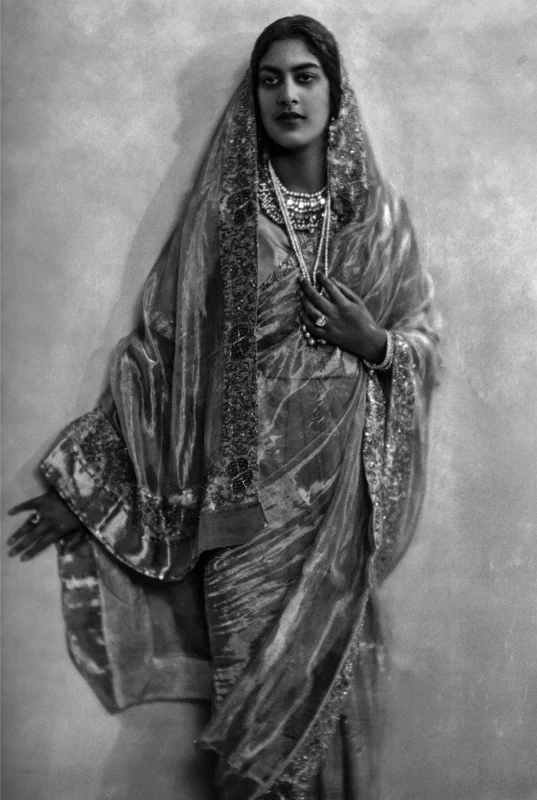
Daughter of Maharaja Jagatjit Singh and Rani Kanari of Kapurthala, Amrit Kaur married Raja Joginder Sen of Mandi in February 1923, linking the two royal houses. She was educated in England. Lafayette photographed her in London on 24 June 1924 during a visit in which she was received by King George V and Queen Mary. The portrait offers a glimpse of the royal women who connected Punjab’s families with the hill states and wider world. She is a different person from Rajkumari Amrit Kaur, India’s first Health Minister. The sources disagree on the wedding day: the Kapurthala pedigree gives 8 February, while the Lafayette archive gives 5 February 1923. Her husband is linked in his own Mandi family tree.
Sources
https://jatchiefs.com/dynasties/alhuwalia-dynasty-states/kapurthala/
Rajput Provinces of India, Mandi pedigree (source-attributed account; corrections and independent documents welcome): https://rajputs.net/view/mandi
https://www.lafayette.org.uk/man8267.html
Generation 17
Rani Usha Devi of Dada Siba
Born: 25 Oct 1919
Died: September 2004
Parent (recorded): Maharajkumar Mahijit Singh
Rajkumar Arun Singh
Born: 29 Aug 1944
Died: Not applicable (living)
Parent (recorded): Major Maharajkumar Karamjit Singh
Parent (recorded): Maharajkumarani Sita Devi
School / institution: The Doon School, Dehradun
Permission to display the living Ahluwalia relatives was confirmed by the site administrator on 9 October 2026.
Rajkumar Martand Singh
Born: 10 Feb 1947
Died: 25 Apr 2017
Parent (recorded): Major Maharajkumar Karamjit Singh
Parent (recorded): Maharajkumarani Sita Devi
School / institution: The Doon School, Dehradun
Textile researcher and conservationist.
Maharajkumari Indira Devi
Born: Not recorded
Died: Not applicable (living)
Parent (recorded): Maharaja Paramjit Singh
Maharajkumari Sushila Devi
Born: 14 Dec 1918
Died: Not applicable (living)
Parent (recorded): Maharaja Paramjit Singh
Parent (recorded): Maharani Brinda Devi
Maharajkumari Ourmilla Devi
Born: 29 Nov 1919
Died: Not applicable (living)
Parent (recorded): Maharaja Paramjit Singh
Parent (recorded): Maharani Brinda Devi
Maharajkumari Cumla Devi
Born: 17 Jul 1926
Died: Not applicable (living)
Parent (recorded): Maharaja Paramjit Singh
Parent (recorded): Maharani Brinda Devi
Living status is not established by the directory; no death date is inferred.
Maharajkumari Aas Kaur
Born: 20 Oct 1933
Died: Not applicable (living)
Parent (recorded): Maharaja Paramjit Singh
Brigadier Maharaja Sukhjit Singh
Born: 15 Oct 1934
Died: Not applicable (living)
Parent (recorded): Maharaja Paramjit Singh
Parent (recorded): Rani Lilavati Devi
The court record identifies her as Sukhjit Singh’s wife. The directory’s placement under Paramjit is not followed; living status remains to be verified.
School / institution: The Doon School, Dehradun
Former Indian Army officer and Maha Vir Chakra recipient. The title records succession in the former ruling family, not present sovereign authority.
Generation 18
Tikka Shatrujit Singh
Born: 27 Dec 1961
Died: Not applicable (living)
Parent (recorded): Brigadier Maharaja Sukhjit Singh
Parent (recorded): Maharani Gita Devi
School / institution: The Doon School, Dehradun
Maharajkumar Amanjit Singh
Born: 10 May 1966
Died: 10 Nov 1991
Parent (recorded): Brigadier Maharaja Sukhjit Singh
Parent (recorded): Maharani Gita Devi
School / institution: The Doon School, Dehradun
Maharajkumari Gayatri Devi
Born: 10 May 1959
Died: Not applicable (living)
Parent (recorded): Brigadier Maharaja Sukhjit Singh
Parent (recorded): Maharani Gita Devi
Maharajkumari Priti Devi
Born: 7 Aug 1960
Died: Not applicable (living)
Parent (recorded): Brigadier Maharaja Sukhjit Singh
Parent (recorded): Maharani Gita Devi
Generation 19
Rajkumar Suryajit Singh
Born: 28 May 1990
Died: Not applicable (living)
Parent (recorded): Tikka Shatrujit Singh
School / institution: The Doon School, Dehradun
Family history
History from the book
The Ahluwalia name recalls Ahlu, a village near Lahore. Jassa Singh became one of the leading Sikh commanders of the eighteenth century, guiding the misls through periods of conflict and supporting the rebuilding of the Harmandir Sahib. His family history should be read separately from the succession of chiefs: after his death in 1783, leadership passed to his kinsman Bhag Singh, followed by Bhag’s son Fateh Singh.
Fateh’s alliance with Ranjit Singh connected Kapurthala to the politics of the Sikh kingdom. Later rulers included Nihal, Randhir, Kharak and Jagatjit Singh. The royal house also developed collateral branches, whose lives included military service, musical patronage and public work. Rajkumari Amrit Kaur, from Harnam Singh’s branch, became independent India’s first Health Minister and helped establish AIIMS. She was a different person from Jagatjit Singh’s daughter, the Rani of Mandi.
Jagatjit’s reign brought civic and educational changes and the architecture for which Kapurthala is remembered. Integration into PEPSU in 1948 ended princely state administration. Paramjit and later Sukhjit represent succession within the former ruling family. Present generations are part of a continuing family story: photographs, letters, school records and sourced corrections can help connect the names to the lives they lived.
Important people and events
1718–1783: Jassa Singh’s life, recorded by Ganda Singh. In 1783 Bhag Singh succeeded to the chiefship; he was a kinsman, not Jassa Singh’s son. Fateh Singh and Ranjit Singh concluded an agreement with the East India Company in 1806. Jagatjit Singh inherited in 1877 and took full ruling powers in 1890. Kapurthala joined PEPSU in 1948. Paramjit succeeded within the former ruling house in 1949. Harnam’s daughter Rajkumari Amrit Kaur became India’s first Health Minister. Bikrama’s collateral branch supported musical traditions. Source disagreements are retained in the tree’s notes.
Migration and ancestral homes
The family name connects to Ahlu near Lahore, now in Pakistan; Kapurthala became the centre of the chiefship. Later branches connect with Lucknow, Shimla and other places through service, marriages and education. These are historical connections, not claims about anyone’s current home or address.
Schools and institutions
The Sherborne school archive confirms Rajkumari Amrit Kaur attended Sherborne Girls in 1902–1905. Jasjit’s biography records Aitchison College, Lahore. The sourced profiles for Arun, Martand, Sukhjit, Shatrujit, Amanjit and Suryajit record The Doon School, Dehradun. Jagatjit was privately tutored; the later use of his palace by Sainik School does not mean he attended it.
Where the family is now
The tree now includes later Kapurthala generations, with permission confirmed by the site administrator. Present-day addresses and contact details have not been inferred from historical sources. Descendants can contribute their own current connections, photographs and memories for review.
Read the sources
- Kapurthala district government history
- Ganda Singh, Sardar Jassa Singh Ahluwalia
- Research thesis: Rise and Fall of Ahluwalia Misal
- Kapurthala genealogy: compare with correction notes
- Delhi High Court judgment: family relationships
- SOAS research: Kapurthala musical patronage
- Sherborne school archive: Amrit Kaur attendance
- AIIMS institutional history
Historical accounts reflect the source and its period. Family contributions are reviewed by the site administrator. Neither publication nor a download purchase certifies ancestry.
For descendants, wherever life has taken you
Is this your family’s story?
A missing name may be someone your grandparents remembered. An old photograph may be the only face a future generation ever sees. What feels ordinary to your family today can become a treasured part of tomorrow’s history.
Add a missing generation
Connect a parent, grandparent or branch you know.
Give a name a face
Share a family photograph, with permission and any known date.
Tell what happened next
Remember an ancestral home, school, journey or family tradition.
Start with one detail. You can return and add more. Include a source where possible, or clearly identify an oral memory. Submissions are reviewed before publication; living people’s details are shared only with their consent.
Help carry our story forward ↗